Temporary Power Solutions for Remote Job Sites: 5 Key Considerations Before Renting

Imagine your construction project, which was a massive investment in time and capital, grinding to a halt because a single piece of equipment failed. For us in Canada’s energy sector, where sites are often miles from the nearest power grid, this isn’t a hypothetical fear. It’s a multi-million dollar risk.

Frankly, your remote site power systems can single-handedly determine your entire project’s success or failure. Grid access is rare, making a reliable jobsite generator rental your single most critical operational decision.

If you get the selection process wrong, you face massive financial penalties, crippling delays, and serious safety breaches. That is why we created this guide.

This comprehensive guide, structured by the experts here at NexSource Power (NPI), provides the actionable checklist you need. Read on to ensure your construction power rental is a lifeline, not a liability.

The Financial Imperative: Why Precision Matters

Let’s be direct: Industrial downtime costs big money. The MaintainX State of Industrial Maintenance report shows that the average cost of unplanned downtime for industrial facilities is about $25,000 per hour.

When a failure hits your remote site, the cost isn’t just lost work. It includes emergency call-outs, specialized logistics, and a total project disruption. With the Canadian construction market valued at over $280 billion in 2024, as reported by Next Move Strategy Consulting (NMSC), seamless operations are a must for risk management, along with a proactive approach to finding robust power for remote locations.

Phase I | The Technical Deep Dive

The costliest error we see is renting an incorrectly sized generator. The right power system balances capacity, efficiency, and logistical feasibility. It’s a precision game.

1. Load Calculation: kW vs. kVA

Performing a complete generator power load calculation is the most vital step.

  • Running Load (kW): This is the continuous power required by your equipment (lights, machinery).
  • Starting Load (kVA/Surge): This is the huge, instant power surge required to start large motors (pumps, compressors). This spike can be 3-7x the running load. If your industrial generator rental cannot handle this surge, your entire system will shut down.

Best Practice: Never rely on simple nameplate ratings. Consult an electrical engineer for a professional load bank test simulation. This is the only way to prevent both dangerous underpowering and wasteful over-renting.


2. Fuel Source and Logistics

Your fuel choice directly impacts your operation, compliance, and temporary power setup cost.

  • Diesel Generators: The workhorse, diesel generator rentals in Canada offer high power density and reliable cold-weather performance. Just ensure they meet strict emission standards (e.g., Tier 4 Final).
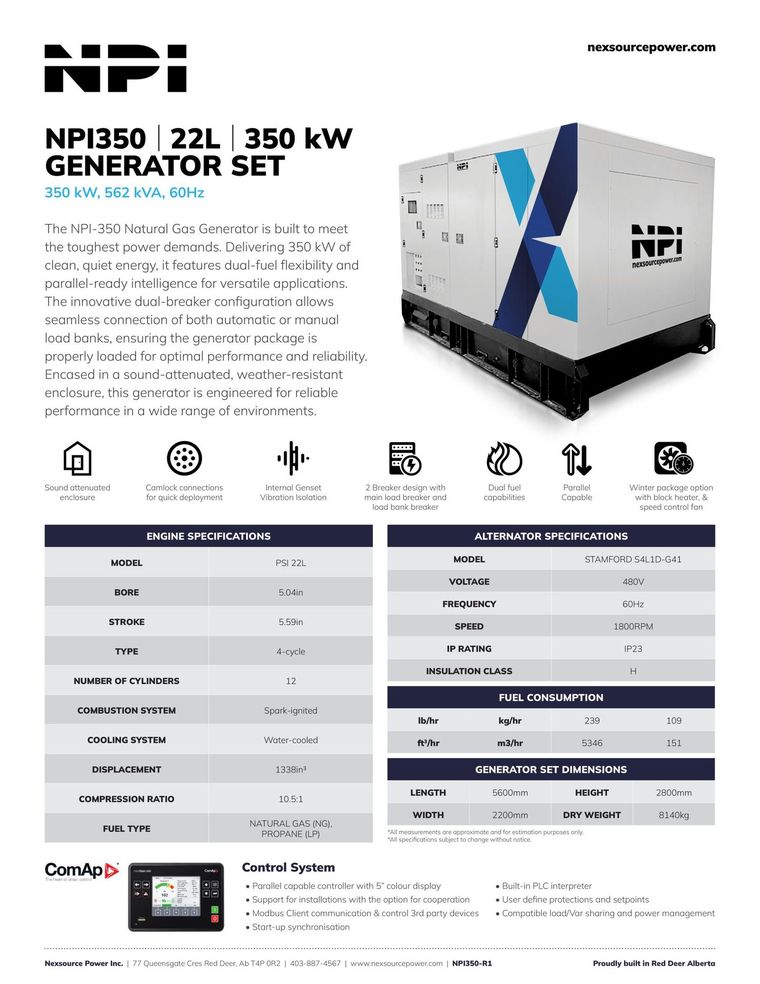
  • Natural Gas/Propane: These are cleaner fuels. If gas lines or reliable delivery are near, they significantly reduce the logistical headache and cost of diesel refueling.
  • Hybrid Systems: Modern temporary power solutions often use hybrids. They combine generation with Battery Energy Storage Systems (BESS). BESS handles low-load cycles and start-up surges, making your generator more efficient and quieter and reducing fuel use.

Phase II | Site and Safety Requirements

A powerful generator is worthless without safe, compliant distribution. This is where most operations fail, leading to risks and fines.

3. Distribution, Grounding, and Safety

Power must be safely and efficiently moved to every tool. This requires high-quality portable power distribution equipment.

  • The Power Path: Use industrial-grade cables, transformers, and temporary electrical service for construction panels. All components must be rugged and correctly rated for site voltage.
  • Grounding: Proper grounding is essential for site safety. Your temporary site must have a carefully designed grounding system that meets the requirements of the Canadian Electrical Code (CEC). Never compromise on this safety step.
  • Overcurrent Protection: Your rental package must include coordinated overcurrent protection (breakers). This isolates faults and prevents a single failure from taking the entire remote site power systems offline.

4. Environmental and Climate Factors

Canada’s extreme climate requires specific technical adjustments that you must demand from your vendor.

  • Temperature Derating: Engines lose efficiency as altitude and temperatures change. Ensure your unit is rated to deliver the full output at your site’s specific elevation and temperature.
  • Emissions and Noise: Most areas have strict noise rules. Rental generators must use sound-attenuation enclosures and Tier 4 Final engines. This ensures compliance and maintains good community relations.


Phase III | Financial and Partnership Strategy

The full temporary power setup cost is more than just the monthly rate. You need to analyze the entire service contract carefully.

5. Analyzing Total Ownership Cost (TOC)

Look for all the costs when reviewing construction power rental quotes:

Cost Component Description
Rental Rate Generator, Distribution Panels, Cable rental fees.
Logistics Mobilization, freight, and de-mobilization costs.
Fuel Management Cost of fuel, tank rentals, and refueling services.
Maintenance Included service visits, call-out fees, and emergency response time.
Insurance/Damage Liability insurance and deductible for accidental damage.

Renting is often preferred for temporary projects. It turns a large capital expense (CAPEX) into a predictable operational expense (OPEX). Crucially, it shifts the burden of maintenance and storage entirely to your rental partner.

Partnering with NexSource Power (NPI)

Securing reliable temporary power solutions is complex. It needs specialized knowledge in engineering, logistics, and compliance. A partner who understands the high-stakes Canadian industrial environment can make it easy for you.

NPI’s expertise covers the whole design, engineering, supply, and installation of all power needs, ensuring compliant, turnkey solutions. Contact us today for a precise load assessment and secure your operational uptime.

Frequently Asked Questions (FAQs)

  1. What is the usual lead time for a large industrial generator rental?

Lead times vary widely based on size and current market demand. For standard units (up to 500kW), expect 1-2 weeks for mobilization and setup. However, specialized or custom packages for very remote site power systems may require 4-6 weeks for fabrication, rigorous testing, and freight logistics.

  1. Should I rent a natural gas or diesel generator for a long-term project?

For long-term projects in power for remote locations, natural gas is often the better choice if a pipeline connection is feasible. While diesel generator rental in Canada provides easy cold-start reliability, natural gas offers significant fuel cost savings, lower emissions, and less frequent refueling logistics over months of continuous operation.

  1. What steps ensure my portable power distribution equipment is CEC compliant?

Always verify the supplier’s equipment has an official certification mark (CSA or similar) and is rated for the correct voltage/amperage. Ensure the system includes GFCI protection and that the supplier provides a certified electrician for the temporary electrical service for construction setup to finalize grounding and panel connections on site.

Temporary Power Solutions