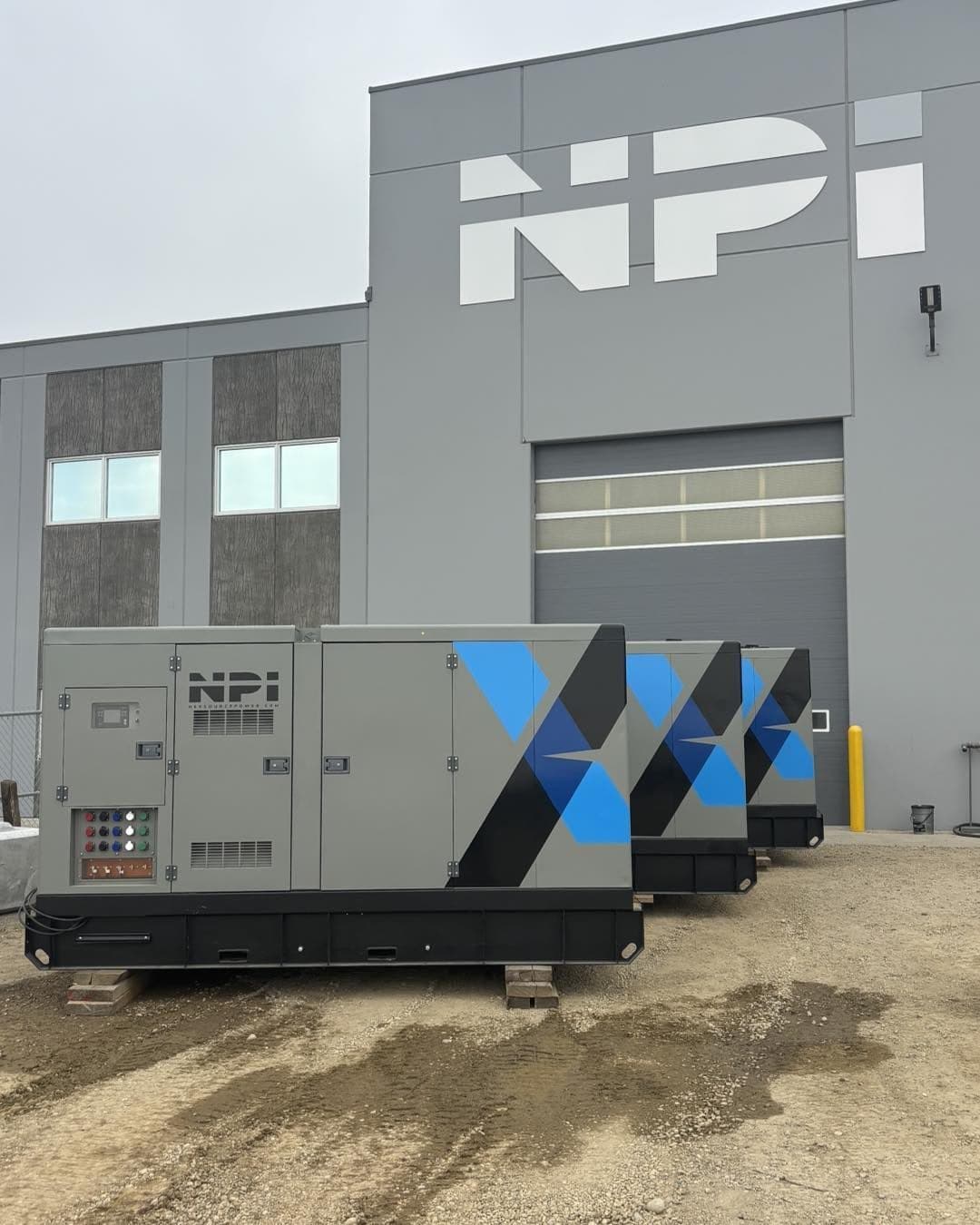
A generator is one part of it. The rest is getting that power to the trailer row, the crane and every floor's tool circuits, keeping it running through weekends and winter, and handing over cleanly when the utility arrives — planned as one system and quoted as one package.
Where the power comes from sets everything downstream of it — the size of the set, how long it stays, where the panels go and whether a transfer switch belongs in the package. It is also the one question that usually gets answered too late.
Where the utility can set a temporary service on the lot in time, it is usually the cheapest power over a long build — but the connection is booked on the utility's schedule, not the project's, and a site that cannot start without it is waiting on someone else's calendar.
The answer for a greenfield lot with no service nearby, a remote site, or a schedule that will not wait. Nothing to apply for, and power arrives with the first trailer — at the cost of fuel and a unit that has to be looked after.
The common case on a larger build: a generator carries mobilization and the early structure, and hands over to the temporary service or the permanent supply once it is energized. Planned from the start, the switchover is an afternoon rather than a scramble.
Sizing the generator itself for each phase of the build — crane starts, the step down for fit-out, voltage — is covered on construction generator rental.
Close enough to the load that cable runs stay short, far enough from the trailers that exhaust and noise stay outside them, and somewhere a fuel truck can reach without crossing the laydown yard.
The generator feeds a main distribution panel, which splits to the places that actually draw power: the trailer row, the crane or hoist, pumps, and the tool circuits on each floor. Panels in the fleet run from 30 A to 1,200 A, so each branch gets gear sized to it.
Runs that cross roadways, follow the building up as it rises and get moved every time the laydown changes. Distance is planned at the quote, because a long run on a big site is where voltage drop starts tripping equipment.
Where the site will move from generator to utility — or needs the generator to take over when a temporary service drops — a transfer switch makes it a controlled switchover instead of a re-termination.

Most lost days on temporary power are not a generator failing. They are a tank that ran dry, one set carrying a load that could not afford to stop, or heat and light sharing a source they did not need to share.
A fuel tank beside a diesel set stretches the gap between deliveries, so a long weekend or a snowed-in access road does not end with a dark site on Monday.
Concrete pours, dewatering pumps and heated enclosures are the loads that cannot stop. On those, a second set or a switch to a backup source is cheaper than the pour.
Light towers and flameless heaters carry their own engines, so night work and winter heat do not load the site generator or share its fate if it stops.
Field service answers 24/7. A set that faults at night on a pour is a call to the people who supplied it, not a search for whoever is open.
Distribution, fuel storage, light towers and flameless heat, read live from the rental fleet. The generators are on construction generator rental, sized by build phase.


Proving the building's permanent standby set at commissioning? Load bank rentals do that before the owner takes the keys. For power across the province, see generator rentals across Alberta.
It depends on how soon the utility can connect, how far the site is from service and how long the build runs. A temporary service is usually cheaper over a long project if it arrives in time; a generator is the answer when it will not, when the site is remote, or for the months before the service is live. Many sites use a generator first and switch over later.
Whatever the site needs between the source and the plug: the generator, a main distribution panel and branch panels for the trailers, crane and tools, cable, a transfer switch where there will be a handover, and fuel storage. Light towers and flameless heaters are often quoted in the same package so one delivery covers the site.
It varies by job. On some sites the project's own electrical contractor terminates the distribution and holds the permit; on others the connection is arranged as part of the package. A temporary installation is still an electrical installation, so settle who owns the permit and inspection before the delivery date, not on it.
Yes, and it often should for a while. Keeping the set connected through a transfer switch while the new service settles gives the site a fallback during commissioning. When the permanent supply has proven itself, the set goes back — or stays as standby if the building's own generator is not in yet.
Yes. A remote site is a generator site for its whole life, so fuel storage and a backup source for the critical loads matter more than they do in town. Natural gas or propane packages are worth considering where there is gas on or near the site, because they take fuel deliveries off the schedule.
Send the site address, the start date and expected duration, what will draw power — trailers, crane or hoist, pumps, welders, heat — and whether a temporary or permanent utility service is planned and when. The quote comes back in writing, with the distribution laid out, and sizing advice costs nothing.
The address, the dates, what draws power and when the utility is expected. The quote comes back in writing with the source, the distribution and the handover laid out — one package, one supplier to call.