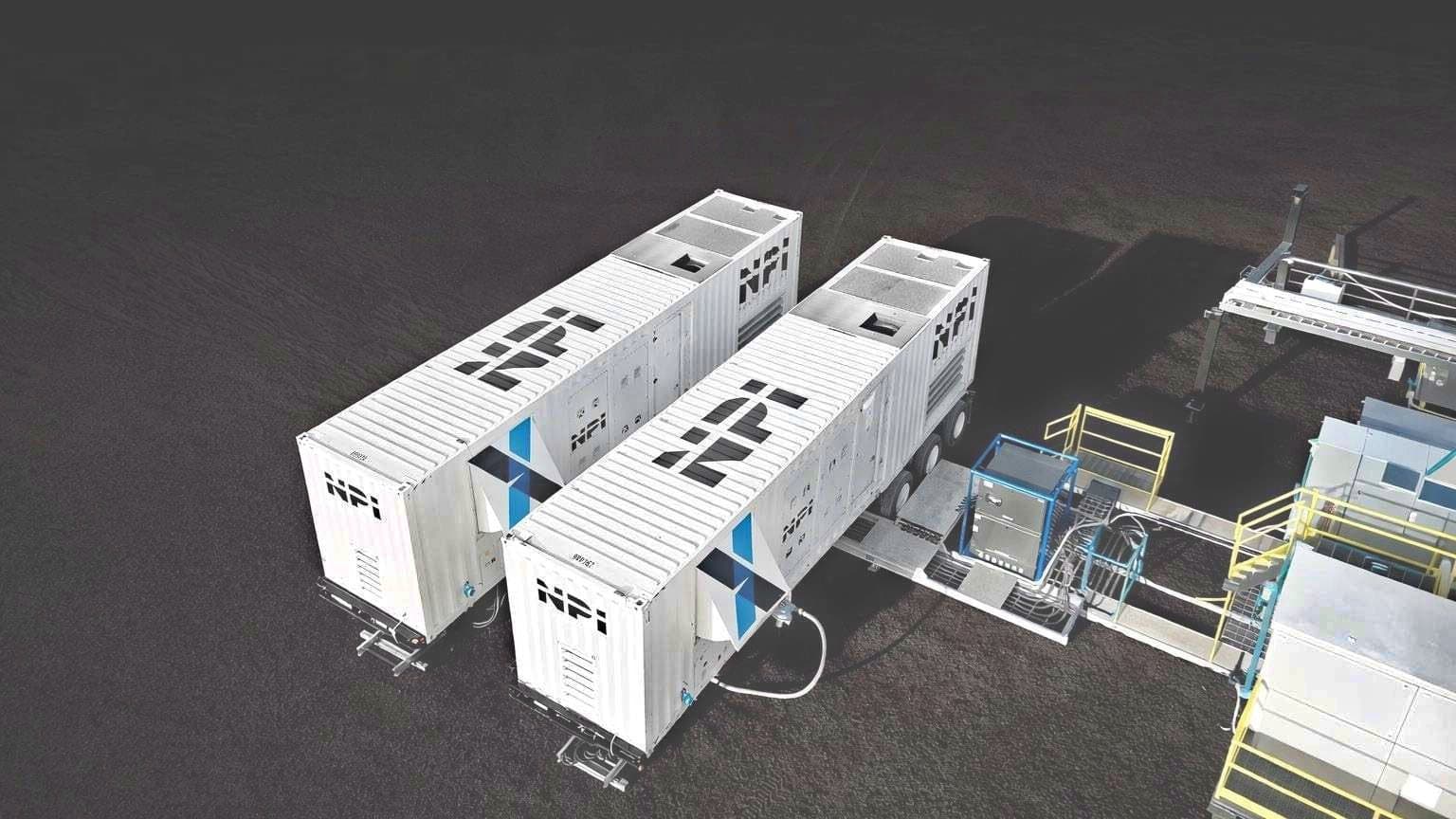
Packages from 25 kW to 1.9 MW on skids, trailers and in containers — burning utility gas, field gas or propane, most of them able to take either fuel. Sized against the gas analysis as carefully as against the load list.
Everything on this page burns gas, but where that gas comes from changes what actually goes on the truck — the regulation, the conditioning at the inlet, the pressure the package wants to see, and whether propane needs to be standing behind it. Three cases cover nearly every enquiry.
A plant, a shop or a yard with a utility connection has already solved the hard part. What is left is the pressure at the tie-in and the size of the line feeding it, both confirmed against the package before it leaves the yard.
A producing lease can feed the set from its own gas and take fuel haulage off the job entirely. It is the reason most of this fleet burns gas at all — and it is conditional on what that gas turns out to be.
Nothing to tie into, but a tank can be set. Much of the fleet is dual-fuel, so propane answers both the site with no gas at all and the site whose gas supply is interrupted mid-job.
None of the three at your site? Diesel generator rentals is the other half of the fleet, and the better answer when the fuel has to arrive on a truck.
A set that runs on wellhead gas is the widest cost gap between this fleet and a diesel one. No delivery schedule, no bowser standing in containment, nothing to keep full through January — and on a prime-power term measured in years, that gap widens every week the unit is out.
It is also the part that hurts when it is assumed rather than checked. Raw gas turns up wet, sour, or at a pressure the package was never set for, and each of those damages an engine instead of merely inconveniencing it. The analysis is what the inlet equipment is drawn from: liquids size the scrubber, H₂S decides what the package has to tolerate, heating value informs how the engine is tuned, and line pressure sets the regulation ahead of it.
That conditioning rents too. Inlet scrubbers come in a range of sizes and configurations, and the regulator and hoses travel with the set rather than becoming someone else's discovery on commissioning day.

This grid is the fleet itself rather than a list typed into a page, so what is here is what can be quoted today. Engine, alternator, voltage and enclosure sit on each unit's own listing.


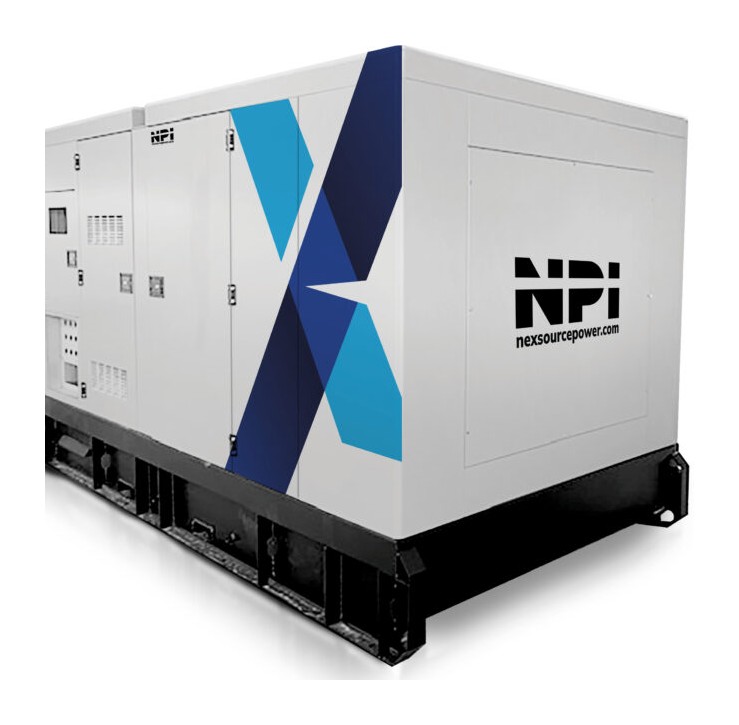

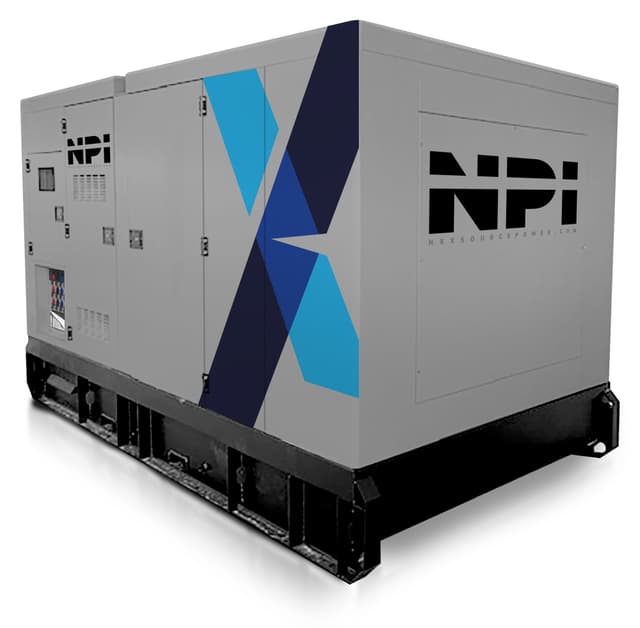


Most quotes cover more than the set: panels, cable and transfer switches to get the power where it is wanted, and a load bank for the commissioning run.
Several of the packages above were designed and assembled in Red Deer — frame, enclosure, engine and alternator, controls, breakers and cabling. On a rental that counts for more than a badge does: whoever specified the machine is also whoever turns up to it in the field, and what a wet spring or a cold snap teaches goes into the next build instead of into an argument about whose fault it was.
It shows up in choices that only make sense if you have watched these units work. Both fuels come as standard because sites lose gas supply. The controller parallels from the factory because loads grow mid-project. There is a breaker reserved for a load bank because rented sets spend real time lightly loaded, and an engine left to loaf is an engine being quietly damaged.
Natural gas and propane on every unit in the series, not an option to be specified at order time. A supply that falters becomes a fuel change rather than a stand-down.
Synchronising, load sharing and VAR sharing live in the controller from the day the package is assembled, so more capacity is a delivery rather than a redesign.
A second breaker beside the main one. A lightly loaded set can be worked properly against a bank, automatic or manual, without taking the site off power to do it.
Parts and field service come from Red Deer, not a distributor two countries away, and every unit is load tested before it ships with the results written down rather than assumed.
On part of the gas fleet the rental payments can count toward buying the unit instead of ending with the term — worth raising early if the load looks permanent rather than seasonal. On the yard today that covers:
A regulator sized for the pressure at the tie-in, and where the gas needs it, an inlet scrubber — the fleet carries Lo Tech scrubbers rated at 195 PSIG in several sizes and configurations. Both are specified from the gas analysis rather than fitted as a matter of course: a package running on a utility service does not need what a wellhead package needs.
Much of it is built for both. The dual-fuel packages run on natural gas or liquid propane and change between them, which is how a site whose gas supply falters keeps working instead of standing down until it is back. The remainder are natural-gas only. The fuel line on each unit's listing says which is which.
Less than a diesel of the same rating, and it is worth saying so plainly. A large motor draws several times its running current for the moment it starts, and a spark-ignited engine recovers from that more slowly. Usually it is handled by sizing against the step rather than the total, by staggering starts, or by soft-starting the worst motor on the site. Where none of that is available, diesel is the better tool and we will say so.
Another one joins it. The NPI Series is parallel-capable as built, with synchronising and load sharing in the controller rather than bolted on afterwards, so two 350 kW units make 700 kW and three make 1,050 kW. It is also how a site stays powered through a service call: one unit comes offline while the others carry the load.
It removes a whole category of problem. There is no fuel to gel, no tank to keep topped up at minus thirty, and no truck that has to get up the lease road in a storm to keep the lights on. It does not remove the cold: NPI Series packages can be specified with a winter package — block heater and speed-controlled fan — and wet gas still needs its liquids taken out before the engine sees them, which is what the inlet scrubber is there for.
From 120/208 V on the smallest package up to 347/600 V, with selectable units in between — the CAT DG400 covers 208 V to 600 V, and the XQ135 comes in both 480 V and 600 V. Say what the site needs when you enquire: on this fleet the voltage usually picks the unit, and finding out on delivery day is how a transformer ends up in the scope.
Running load, the largest motor on site, the voltage, the term, and whatever the gas analyses at. That is enough to specify the package, the regulation and the inlet equipment, and to put the whole thing in writing.