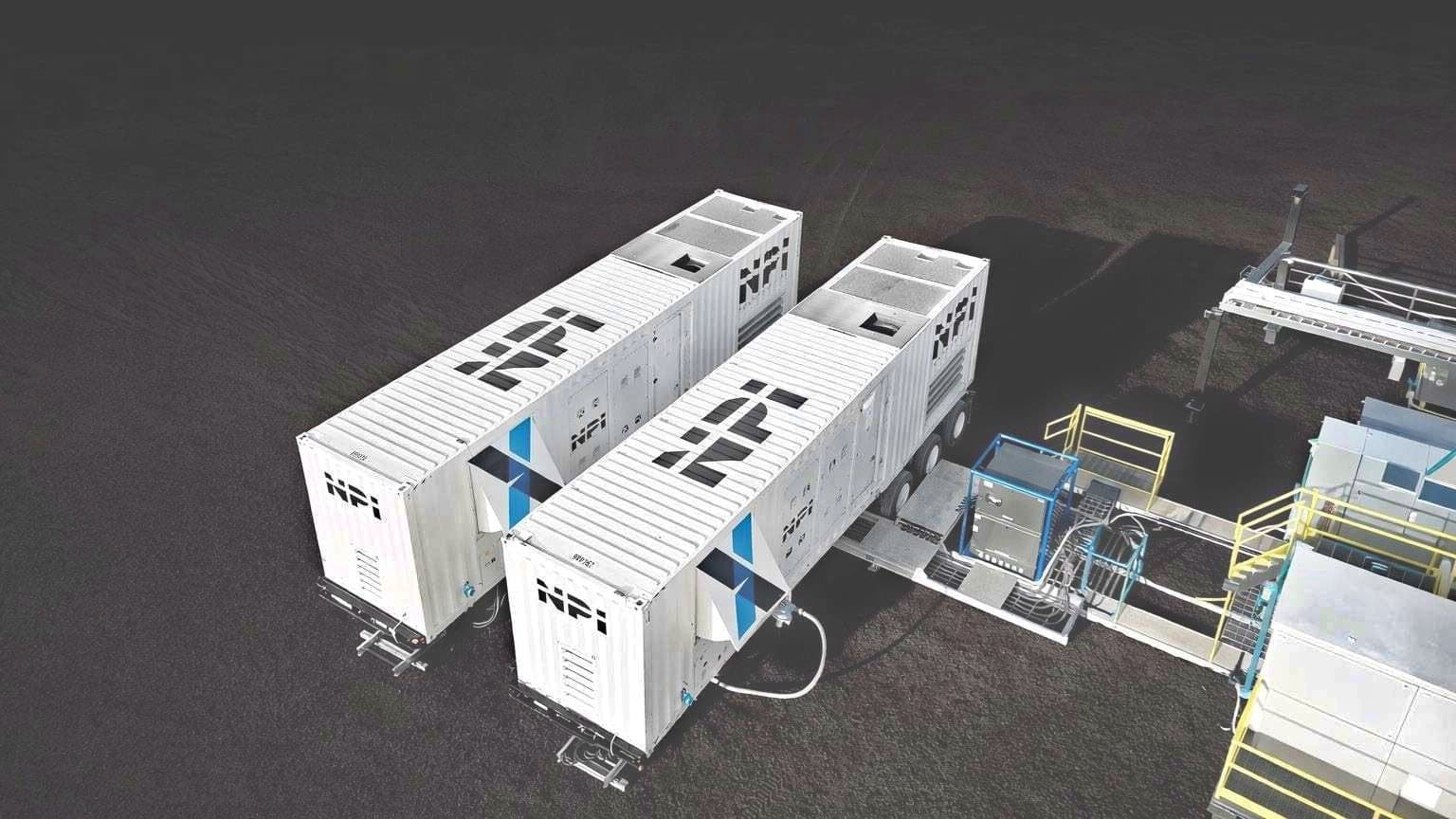
Planned servicing, oil sampling, load bank testing and commissioning for industrial and commercial generators — the NPI Series, sets we rent and sell, and other makes. The work is done on site by technicians from Red Deer, and field service answers 24/7 if anything gives out between visits.
Two identical engines can need very different care. One that sits waiting fails from neglect; one that never stops fails from wear. The schedule starts with which of those your generator is.
The generator behind a plant, an office tower or a server room, idle until the utility drops. It may log a few dozen hours a year and still be expected to start on the first try, in January, with nobody watching. Servicing one is mostly about proving that it will.
Units that carry a lease site, a camp or a facility every day. Hours build quickly, so the schedule is counted on the hour meter rather than the calendar, and an oil sample taken at each change tells you more than any visual check.
Gas and dual-fuel engines burning line gas, lease gas or propane. What is in the gas matters: liquids carried over from a wellsite wear an engine in ways diesel never does, so regulators, scrubbers and the gas train get as much attention as the oil.
Our technicians work on other makes as well as our own. For the sets NexSource builds, the NPI Series page covers how support works from the people who assembled the package.
Exactly what is done on a given visit depends on the engine, the manufacturer's schedule and the hours since the last one. The ground covered is much the same from set to set, and it ends with the generator doing its job rather than just idling.
Keep the findings in writing: what was changed, what was measured and what is worth watching. That record is what the next technician, and whoever signs off on the equipment, works from.

| System | What gets attention |
|---|---|
| Lubrication | Oil and filters changed on the interval, and a sample drawn and sent for analysis. |
| Air and fuel | Air filter restriction, fuel filters and water separators, lines and fittings; on gas sets, regulators and the scrubber. |
| Cooling | Coolant level, strength and condition, belts and hoses, radiator cores, and the block heater that keeps a cold engine ready to start. |
| Starting | Batteries, charger, cables and terminals — the system behind more failed starts than anything else on a standby set. |
| Alternator and controls | Connections, controller settings and alarm history, and the protective shutdowns that stop an engine before it destroys itself. |
| Exhaust and housing | Leaks, mounts, louvres and doors, and whatever snow, chaff or dust has packed itself into the enclosure. |
| Under load | A run that shows the set picks up and carries the work it is there for, with voltage, frequency and temperatures read off as it does. |
Low hours are not the same as low wear. Oil oxidises and picks up moisture whether the engine runs or not, coolant loses its protection, and a battery that tested fine in August can be flat by the first cold snap. A standby set serviced only on its hour meter will eventually be found wanting on the one day it is needed.
Diesel stored in a tank for months takes on water and can grow microbial sludge that plugs filters at the worst moment. Checking the tank, draining the separator and changing filters on time is cheap next to a stall during an outage.
Alberta winters add their own list: block heaters that must actually be heating, batteries with the cranking capacity for minus thirty, fuel that will not gel, and enclosures that keep blowing snow off the alternator.
The opposite problem catches prime units sized well above their load. A diesel that runs light for weeks does not get hot enough to burn clean, and unburnt fuel and carbon build up in the exhaust — wet stacking. Regular time on a load bank clears it and shows whether the set can still make its rating.
A sample from the drain goes to a lab, which reports wear metals, fuel or coolant in the oil, soot and how far the oil itself has broken down. One result is a snapshot. A run of them from the same engine is a trend, and a trend shows a bearing, a liner or a leaking cooler long before any of them fails.
On prime units carrying a site, it is the cheapest early warning there is.
Exercising a standby set on whatever the building happens to be drawing proves it starts. Putting it on a load bank proves it can carry its rating, holds voltage and frequency while it does, and stays within temperature for the length of the test.
The banks come from the NexSource load bank rental fleet. Facilities that test often enough to want their own can look at load banks for sale.
A newly installed generator, one moved to another site, or one coming back from a rebuild should be started, loaded and checked before anyone counts on it. Commissioning covers start-up, load testing and the hand-over, with the results written down rather than assumed.
For a standby installation that includes seeing the set and the transfer switch hand the load over and back the way the design intends.
Owners with several sets, or one that matters a great deal, usually do better with a program than with calls as things come up. Visits are planned around production, shutdowns and seasons, the equipment is looked at on a rhythm rather than in a hurry, and every visit adds to the history of each unit.
Ask what a program would look like for yours. The answer depends on how many units there are, where they are, how they run and what the site needs from a contractor.
None of it is required to start the conversation, but each item means one less trip back to the truck.
From the nameplate on the alternator or the engine. A photo of the plate is plenty.
The reading on the meter or the controller, and roughly when the last service was done.
Standby, waiting on a transfer switch, or prime, carrying the site day in and day out.
Diesel from a tank, utility gas, lease gas or propane — and for field gas, any analysis you have.
Site location, access, and any orientation, permits or prequalification the site asks of contractors.
Previous service reports or oil results, if they exist. They save repeating work and start the trend.
Maintenance lowers the odds; it does not make them zero. Field service answers 24/7, every day of the year. The generator repair page covers what to tell the dispatcher, where fault-finding starts, and how a rental set can carry the site while yours is down.
Call (403) 887-4567Start from the engine manufacturer's schedule, then adjust for how the set is used. A prime unit is serviced on run hours, which can mean every few weeks on a busy site. A standby unit can go months without many hours, but its oil, coolant and batteries age on the calendar regardless, so it still needs regular visits. The interval NexSource sets is matched to how the unit actually runs.
Yes. Our technicians work on other makes as well as our own, and carry parts for the fleet we support most often. Send the make, model and serial when you book so the right parts and the manual go out with the visit.
Oil, filters and an oil sample; fuel, air and cooling systems; batteries and the charger; the alternator, controls and protective shutdowns; the exhaust and enclosure; and a run under load. On gas sets the regulators and gas train are part of it too. What goes on the list for a particular unit depends on its engine, its duty and its hours.
Yes. Load banks come from the NexSource rental fleet, which is resistive throughout — the kind used for ordinary acceptance and periodic generator testing. If a specification calls for reactive load at a stated power factor, say so when you book.
Planned maintenance is done where the generator sits, by a technician dispatched from Red Deer. Larger jobs — an overhaul or a rebuild — can come back to the shop, and the quote will say which makes sense.
It is quoted per job, with no rate card. The number of units, their size and fuel, the distance from Red Deer and what each visit includes all move it, and the quote comes back in writing.
Tell us the make, model and hours, how the set runs and where it is, and the quote comes back in writing. NexSource works from Red Deer and services generators on sites across Alberta.