Trailer-mounted gas and diesel sets on terms of a season, a year or longer — load tested in Red Deer before they ship, and serviced by NexSource until the lease ends.
People search for a lease when the job has stopped looking temporary. The set is the same one you would rent for a week; what changes is how long it stays, how the price is built around that, and whether owning it starts to make more sense. Four ways to hold the same generator:
A shutdown, a turnaround, a winter pour or a stretch of storm season. You need the power until a known day, then the set goes back to the yard and the cost stops.
Same equipment, longer term. A camp, a facility waiting on a utility connection or a producing site that needs power through more than one season. The length of the term is part of the quote, and it changes the number.
On units flagged Rent to Own in the inventory, rental payments go toward buying the set. Worth asking about when you suspect the load is permanent but are not ready to commit capital on day one.
When the term runs past the point where rent outweighs the price of the set, owning it wins. Most of the fleet is offered for sale as well as rent, so the comparison can be made on the same unit.
Not sure which side of the line you are on? Price the full term as rent and set it next to the price of the set. If the two are close, ask about rent-to-own, or look at the used generators for sale — a set bought used can cost less than a long lease.
In an industrial fleet, a portable generator isn't something you lift into a pickup. It is a complete package on wheels: towed to site, set down, connected and towed away again at the end. That matters more on a lease than on a short rental, because long-term sites rarely stay put.
The generator, enclosure and usually a fuel tank ride on a highway trailer. It arrives behind a truck, gets levelled and connected, and leaves the same way. No crane on site.
Weatherproof and sound-attenuated housings let the set sit outdoors for the length of the lease — through spring breakup, summer dust and a January cold snap.
On a long lease the site often changes. A crew moves to the next pad, a camp relocates, a load grows. A towed set can follow the work rather than being replaced.
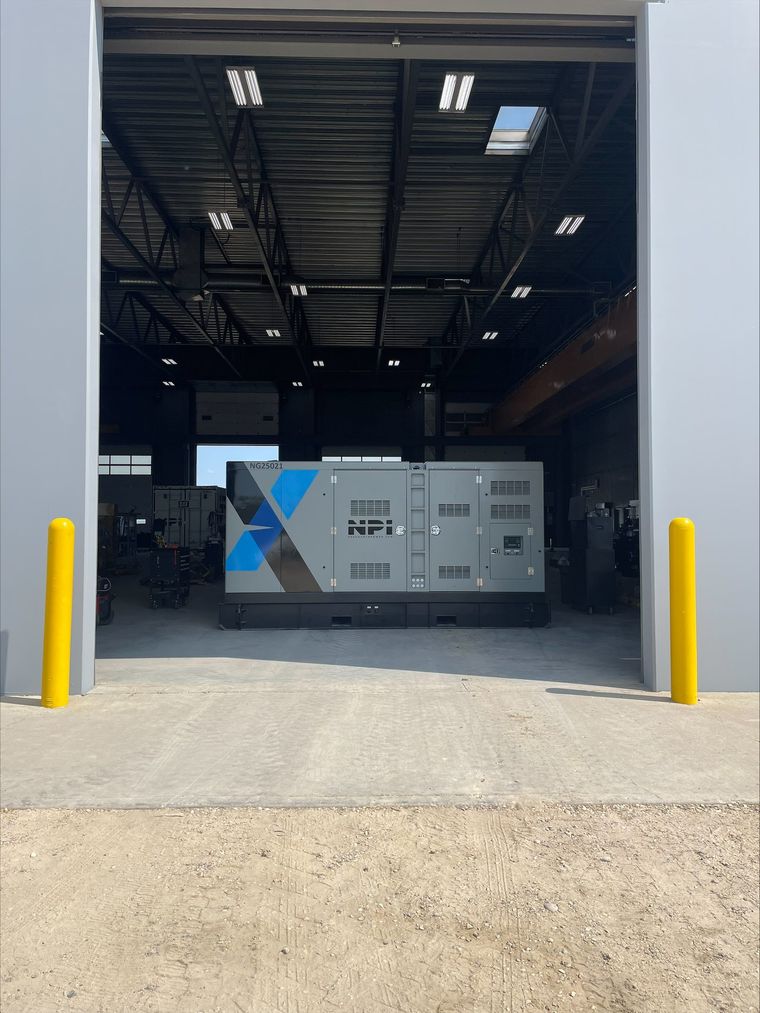
Read live from the inventory — the trailer-mounted and mobile generators currently on rent. Ratings, voltage, fuel and whether a set is offered rent-to-own are on each card and unit page. Skid-mounted sets for longer, fixed installations are in the full Alberta rental fleet.


Over a year, the fuel a set burns can outweigh what it costs to rent. Where the site has utility gas, field gas or room for propane, a natural gas generator takes the fuel truck off the schedule. Where there is nothing, a diesel set and a bulk fuel tank stretch the time between deliveries.
A set running around the clock reaches its service interval in weeks, not years. On a NexSource lease, scheduled maintenance and 24/7 field response are part of the term, dispatched from Red Deer.
A lease that starts in July still runs through January. Plan for block heaters and cold starts, for access when the lease road softens at breakup, and for flameless heat if the job needs it.
Long-term sites grow. A set sized only for opening day ends up swapped mid-lease. The generators by size guide walks through matching kW to a load list, starting current included.
Alberta uses the word twice: a production site is a lease, and it often needs power leased to it. A towed gas set can run on the site's own gas once the analysis clears it.
Oilfield production →A build that runs over a year needs power from site prep to the day the permanent service is energised, often moving around the site as it goes.
Construction generators →A business waiting on a utility upgrade, a building between services, or a facility that needs backup through a long project.
Commercial rentals →Grain drying, camps and off-grid operations where the power is needed every season and the site is a long way from a line.
Agriculture →| The load | A list in kW or amps, with the largest motor called out. That decides the size of the set. |
| Voltage and phase | What the equipment or the panel expects — 120/208 V, 480 V and 347/600 V are all common in Alberta. |
| Fuel at the site | Utility gas, field gas, propane or nothing at all. On a long term the fuel choice matters more than the rental rate. |
| How long | A best guess at the term, and whether it could run longer. Say so if buying the set at the end is on the table. |
| Where it sits | The site, the access in each season of the lease, and anything about the ground or the setback rules. |
| Prime or standby | Running all day as the only source, or waiting to take over when the grid drops. The two are sized and serviced differently. |
In practice, the equipment and the support are the same; what changes is the term and the commercial arrangement around it. A lease is a rental agreed for a longer period, and a longer term usually changes the economics enough to be worth a conversation before you sign up for month-to-month. Ask for the term you expect and the quote will reflect it.
Rental terms run from a short dispatch to multi-year contracts for long-term industrial projects. There is no fixed menu of lengths — tell the desk how long you think the site needs power, and whether it might run on.
Only on units offered rent-to-own, which are marked Rent to Own on the inventory listing. On those, rental payments go toward the purchase. Other sets can still be bought outright at the end of a term if they are listed for sale; ask about the specific unit.
NexSource. Scheduled servicing and 24/7 field response from Red Deer run for the length of the term, so oil changes, filters and breakdowns are not your crew's problem. On a site measured in months, that is a large part of what you are paying for.
No. The rental fleet is industrial and commercial: towable sets sized for sites, facilities and camps. For a small handheld-sized generator to run a cabin or a few tools, a general tool rental counter is the better fit.
It is quoted per job. Size, term, fuel arrangement, distribution, distance from Red Deer and whether the set is prime or standby all move the number, which is why there is no rate card. The quote comes back in writing.
That is enough to pick the set, price the lease and set it beside rent-to-own or buying, in writing. NexSource works out of Red Deer and supplies sites across Alberta.

