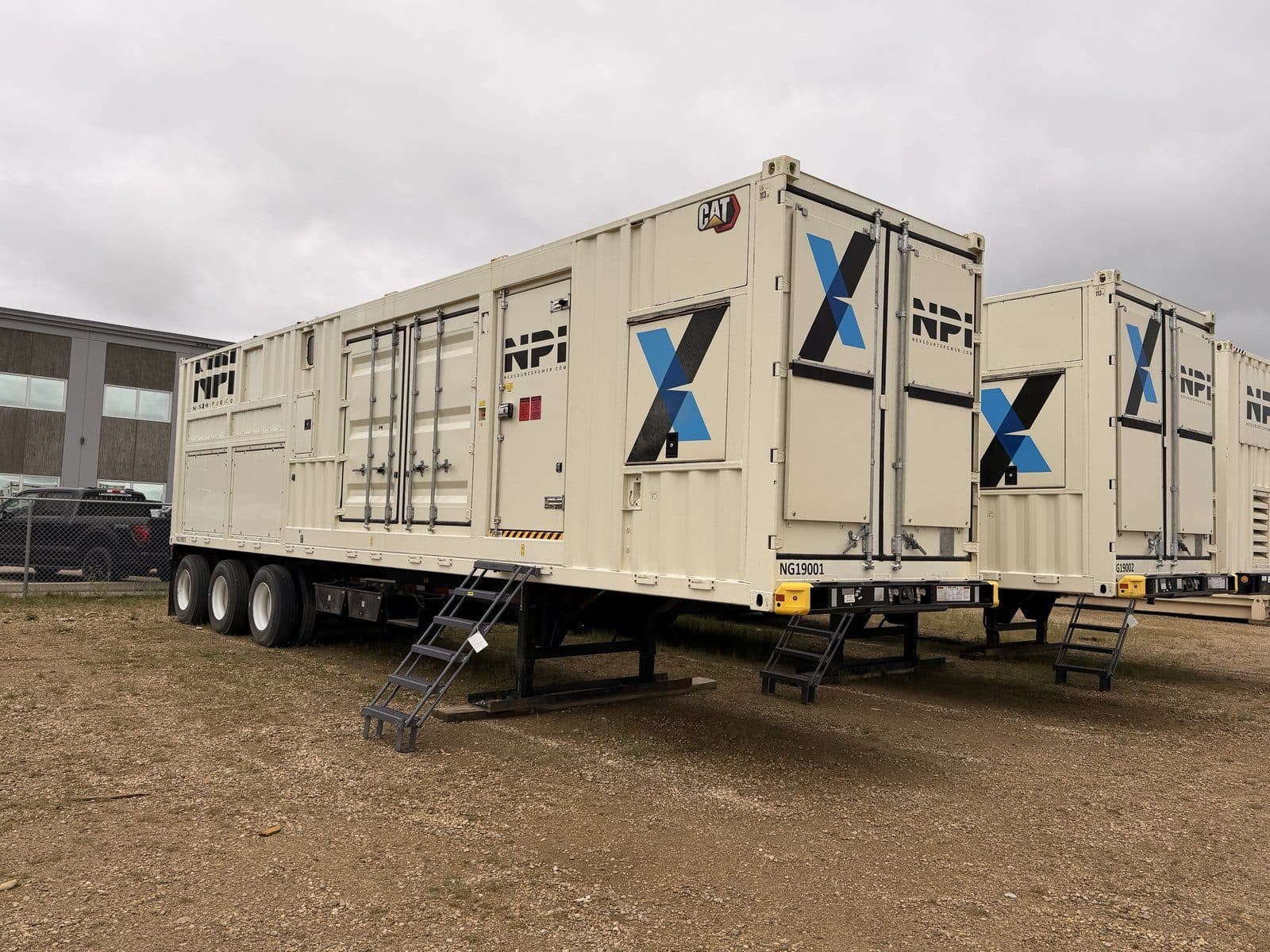
A 1 MW generator rental depends on the site as much as the set: ground that takes a loaded semi-trailer, a gas supply that has been analysed, and distribution rated for the current. On rent today are sets from 1,250 kW to 1,900 kW, and NPI Series units built in Red Deer reach 1,050 kW when three run in parallel. Every megawatt power rental is planned with its pad, fuel and switchgear before anything ships, with field service out of Red Deer, day or night.
This grid reads the rental fleet and shows every generator rated at 1,000 kW or more. If you are pricing a 1,000 kW generator rental or something larger, start here. Each card links through to that unit's specifications. The 1,900 kW package takes natural gas or propane, so a site without a gas line still has a gas option. The CAT XQ1250G lists paralleling controls, and its 3000 A breaker is electrically operated.


No diesel generator of 1 MW or more is listed right now. The smaller sets are on diesel generator rentals, and whether any of them can be paralleled is confirmed unit by unit.
This set is offered rent-to-own. The option sits with the unit rather than with every set of this size, so if a megawatt set looks likely to stay once the job is running, start with the one shown here.
Buying instead? Used and surplus sets for sale, large gas units included, are listed under used generators for sale.
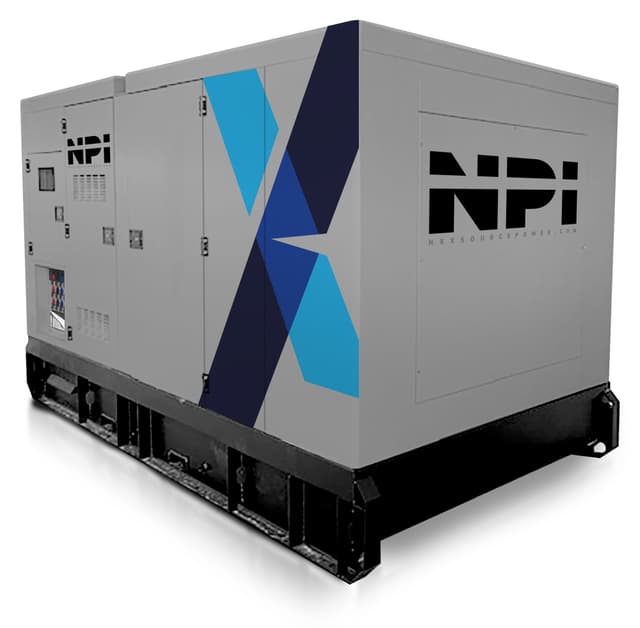
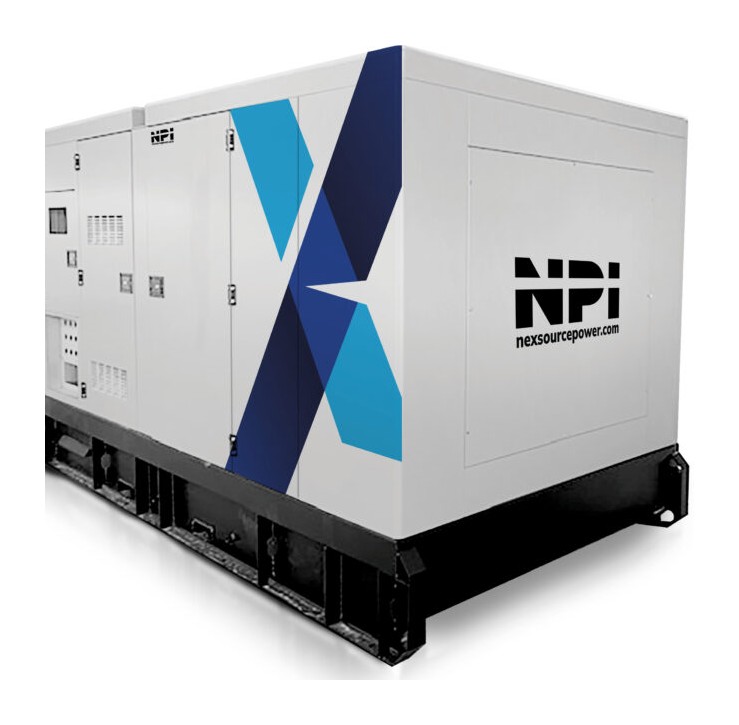
You don't need one large set to reach 1 MW. NexSource builds NPI Series units in its Red Deer shop with paralleling in the controller from the start: it brings each set onto the bus in step and divides real and reactive load across the block. A pair of NPI350s makes 700 kW. Add a third and the block is 1,050 kW, just past one megawatt.
Blocks suit a site whose load arrives in stages, or one where a single set stopping should not stop the work. A single large set suits a load that is there in full from the first day, on a pad that can take one big package.

Each NPI350 added joins the units already running, so the block grows without anything already on site being swapped out.
Add one unit beyond what the load requires, and any set can come off for service or a fault while the others carry the site. On a single megawatt set, the same service means a planned outage.
Run the units today's load needs, then add one as new load connects. Each engine keeps working near its rating instead of idling under a set sized for load that has not arrived yet.
The large sets in the first grid are a separate question: paralleling two of them is confirmed unit by unit, never assumed.
NPI Series units on rent now. The NPI350 is the size used in the blocks above.


A megawatt set arrives as one complete package, and the site has to be ready for all of it at once. It needs somewhere to park, gas to burn and somewhere for the power to go. These four checks come before a quote is final.
A set this size usually arrives containerised on a semi-trailer. The CAT XQ1250G, for example, sits in a 40′ sound-attenuated container on a three-axle semi-trailer. The road in has to take a loaded semi, and the pad has to stay firm and level through rain and spring breakup. Photos or a site plan help at quote time.
Field gas is sampled and analysed before a set is chosen. Liquids in the gas, sour content and supply pressure all have to suit the engine, and the result decides the regulator and whether an inlet fuel gas scrubber goes in ahead of the set. The 1,900 kW package also runs on propane. For the trade-offs, see natural gas vs. diesel above 1 MW and natural gas generator rentals.
Each listing gives the set's voltage or says it is confirmed on request. Where the site distributes at a different voltage, such as 600 V against a 480 V set, a transformer goes in between the generator and the site's distribution. The XQ1250G's 3000 A breaker shows the scale of current involved. Cable size, run length and the tie-in point are worked out from the site plan. What the distribution fleet covers is under power distribution rentals.
Each set is proven on a load bank before the site draws power from it. The 1,000 kW load bank is a 480 V resistive unit with digital load-step control.
Also on rent: load bank rentals for commissioning and periodic test runs, and fuel tank rentals where diesel equipment shares the site.
Large sites rarely need all their power on day one. Construction, commissioning and production each add load, and generation can follow that sequence. Phasing keeps every engine properly loaded, holds the rental to what the site is using, and leaves room for the next set.
Before a set is picked, the loads are listed and the fuel is settled. Gas engines respond to a big step load more slowly than diesel, so the largest motor start either drives the set choice or is moved clear of the others.
The first set or block goes in and runs against the load bank. Only then does the site take power from it.
Cable routes, panel space and the tie-in are left ready for the set that follows. That set may parallel onto the same bus or feed its own part of the site.
Each new set comes in when its load does. Whether two units can share a bus is confirmed for those specific units before the set is quoted.
When the generators are bridge power, the rental ends once the utility service or the site's own plant is energised. Sets come off as the permanent supply takes over their load.
A 2 MW generator rental follows the same steps. No single set that size is listed, so the load is split across more than one set and brought in like any other block.
Megawatt work runs through data centre power builds, engineered power systems, and oilfield production power. Where the set is the only supply over a long term, see prime power generator rentals. Every sector is listed under Industries.
Not as a single set. No 2 MW generator is listed, and the largest set on rent is 1,900 kW. A 2 MW generator rental is quoted as more than one set, and whether those sets share a bus or each take a separate part of the load is settled for the specific units before anything is priced.
There are two routes. One is a single set from the grid on this page, every one of which is rated at 1,000 kW or more. The other is three NPI350 units in parallel, which carry 1,050 kW between them. Which fits a 1,000 kW generator rental depends on whether the load lands all at once or in stages, and whether the site can ride through one set stopping.
Not by default. Two large sets share a bus only when both are built for it, so any pairing is confirmed for those exact units before it is quoted. A listing that shows paralleling controls, as the CAT XQ1250G's does alongside its EMCP 3.3 control panel, is the place to start. NPI Series units are different: paralleling between them is built into their controllers.
Four things. Firm, level ground and an access road that takes a loaded semi-trailer. Fuel: field gas that has been analysed and arrives at a pressure the engine accepts, or propane where the set runs on it. Distribution sized for the set's full current, with a transformer where the site distributes at a different voltage from the set. And a load bank test planned before the site's own load goes on.
On a resistive load bank, before the site's load is connected, so a fault shows on the bank and not on the process. The largest bank in the rental fleet is 1,000 kW. If the set is larger than one bank, ask whether banks can be run together.
Some can. A set flagged rent-to-own lets what you pay in rent build toward buying it, and the flag belongs to the individual unit, not the size class. If the generator looks likely to stay after the job, raise it before the term begins.
For a 1 MW generator rental, start with what the site will run: each load, the biggest motor and how it is started, and the voltage the site uses. Add whether gas is available, with an analysis if you have one, and the loads planned for later phases. The written quote then sets out which set or block fits, what the pad and distribution need, and how the site is phased.