A field, a stage and forty vendors, and not an outlet among them. An event generator rental from NexSource puts quiet, enclosed sets behind the stage, gives the show its own supply with a spare, and runs distribution down every vendor row, so the power is there from load-in to the last bus out.
Event power starts with a list. Some of what is on it is sensitive and can never stop mid-set; the rest is a crowd of small, noisy loads switching on and off all day. Planning the two separately is what keeps a busy food court from being heard through the PA.
Amplifiers, the front-of-house desk and monitor world. Not the biggest draw on the grounds, but the one that shows every flicker and hum to a few thousand people at once.
Dimmers, moving heads, LED walls and the follow spots. Big swings when a cue fires, and the load climbs as the sun goes down and the headliner goes on.
Fryers, griddles, coffee machines, coolers and freezers, each on its own circuit. Lots of motors and heating elements cycling on and off all day, at no one's schedule but their own.
Washroom trailers, pumps, water heaters and the lighting inside. Easy to forget on the list, and the first thing guests complain about when it goes dark.
Scanners, point-of-sale terminals, the network that ties them together, radios and the site office. Small loads that stop the money if they drop.
Paths, parking, the beer garden and the exits. It needs to stay on after the last set while the crowd walks out, which is often when nobody is watching the generators.
Most power trouble at an event starts somewhere other than the stage: a vendor plugs in a second fryer, a cooler compressor starts, a breaker trips at the end of a row. On a shared set, every one of those steps reaches the amplifiers and the lighting desk too.
So the stage gets a supply of its own, with a spare set beside it. On units built for paralleling, such as the NPI Series, the two run together and share the load, and either one can carry the stage if the other drops out.
The stage runs from sets that feed nothing else. A vendor's walk-in cooler kicking on, or a fryer tripping its breaker, never reaches the PA.
N+1: if the stage needs one set, it gets two. On units built to parallel they share the load; either way, one can drop out without the show stopping.
The heaviest moment is usually the headliner after dark, with every light in the rig on. The stage package is sized for that, not for the sound check at noon.
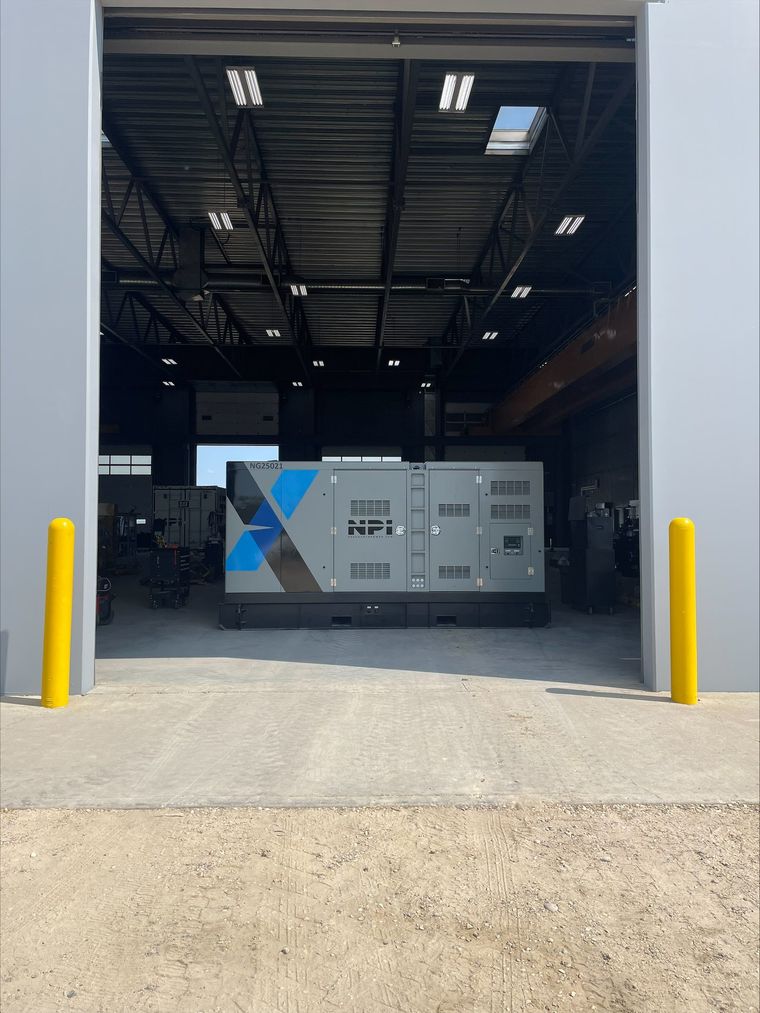
Nobody buys a ticket to listen to a diesel engine. Keeping the sets quiet is partly the equipment and partly where it goes, and both are settled on the site map before anything is delivered.
Sound-attenuated enclosures do most of the work. Several sets on the fleet have one, noted on their listings, and the quote matches the set to how close the audience will be.
Sets go behind the stage or along the perimeter, with the exhaust and radiator pointed away from the crowd, the vendor tents and the camping area.
Generators and panels sit in an area the public cannot reach, with room around them for air, refuelling and a service truck.
Events in town often run under permit conditions on noise and hours. Check yours early; it can decide where the sets are placed as much as the site map does.
Vendors arrive with everything from one coffee machine to a full commercial kitchen in a trailer. A generator alone only gives you one set of terminals; what gets power to each of them is the distribution: panels placed along the rows, breakers sized to each vendor's draw, and cable run from the set to the panels.
The rental distribution panels run from 30 A to 1,200 A and are picked with the generator, so the panel matches the set feeding it. Cable is quoted with the package for the distances on your site map.
The single most useful thing an organiser can do is ask every vendor, before they arrive, what amperage and plug they need. A vendor who turns up needing more than the panel at the end of their row is the most common problem on opening morning.
A one-day event can often run on the fuel the sets carry. A long weekend festival with the stage running late every night may not, and then external fuel tanks go in beside the sets, so refuelling happens on a schedule rather than mid-set. Who fills them is agreed in the quote.
On grounds with a gas service or a propane supply that can keep up, natural gas and propane generators can run on that instead. Elsewhere, diesel generator rentals are the usual choice because they need nothing on site but a level spot and a truck route in.
Each unit is set up and load tested in our Red Deer shop before it leaves. The generators and panels arrive in time to be placed, cabled and run before the vendors start setting up.
The sets run for as long as the gates are open and the lights are needed. Refuelling follows the schedule agreed in the quote, and field service answers 24/7 if something needs attention.
Power stays on through vendor tear-down and the stage strike, then the cable comes up and the equipment goes back to Red Deer.
For a rough idea of the burn over a weekend, try the fuel consumption calculator. The quote confirms it against your load list and hours.
If a production company or an audio provider is running the stage, they will have a power request: the supply they need, the voltage and the connection. Put it in front of us with the vendor list and the site map and most of the sizing is already done.
Smaller events, a wedding on an acreage or a community fair, rarely have any of that, and that is fine. A list of what will be plugged in, with the nameplate ratings where you can get them, is enough to start. The generator sizing guide and the amperage calculator show how that list becomes a generator size.
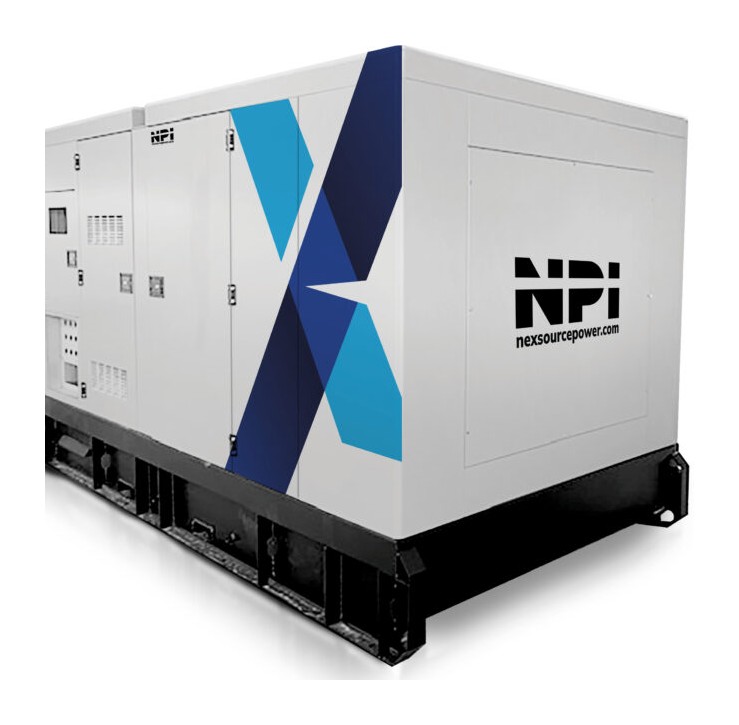
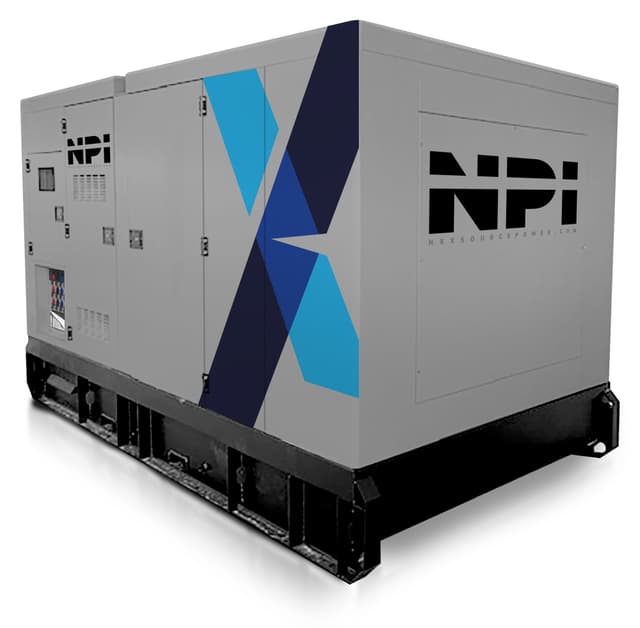
Diesel, natural gas and propane sets offered for rent, read live from inventory. Each listing gives the output, voltage and fuel, and notes a sound-attenuated enclosure where the set has one. Which of them suit your event, and how many, comes from the load list; what is free for your dates is confirmed when you ask.





Running something bigger than a festival stage? See megawatt power rentals. Every unit is in the full inventory.
NexSource works from Red Deer only. Event power for fairs and festivals in Red Deer, Calgary, Edmonton and the rest of the province is prepared there, delivered from there, and supported by field service from there.
It comes from the list of what is plugging in rather than from the attendance. The stage request from your production company, the vendor list with each vendor's amperage, the washrooms and the grounds lighting all go on it, and the stage and vendor packages are sized separately. Send the list and the sizing comes back with the quote.
A sound-attenuated enclosure makes the biggest difference, and the rental listings note which sets have one. Placement does the rest: behind the stage or on the perimeter, exhaust aimed away from people, and as far from the audience as the cable run allows. We do not quote a decibel figure for your site, because distance and layout change it more than the spec sheet does.
Ideally not. Vendor equipment cycles on and off all day, and those steps in load can show up as dips or noise in the stage's audio and lighting. A fault on a vendor circuit also stays on the vendor side. Giving the stage its own sets, with a spare, is the usual layout for anything beyond a small community event.
One more generator than the load needs. If the stage can run on one set, a second set is on site and ready, so a fault, a fuel issue or a breaker trip does not end the show. On units built for paralleling, the two share the load and one carries on alone if the other drops out.
Yes. Fairs, rodeos, festivals, concerts and weddings all rent for the length of the event, with delivery and set-up before it starts and pickup after. Send the dates as early as you can; we will confirm what is free when you ask, not before.
Yes. NexSource works from one location, our yard in Red Deer, and events across Alberta are supplied, delivered and serviced from there. Every set is prepared and load tested in the Red Deer shop before it goes out.
Dates, gate hours, the stage's power request, what each vendor needs and anything on the permit about noise. You get a written quote for the stage sets and spare, the vendor supply, the distribution and the fuel, prepared in Red Deer and supported 24/7 while the event runs.

