Natural gas, propane and diesel sets for businesses buying a generator to keep, whether for standby behind a building or as the only supply on a site. Every listing shows its voltage, fuel and rating; the price is quoted in writing for the unit you choose.
A business generator is bought for one of three jobs, and each one reads the same listing differently. The rating that matters, the fuel that makes sense and the equipment around the set all follow from which it is.
The set waits for the utility to fail, then picks up through an automatic transfer switch. Most of its life is spent idle and exercised, so the buying questions are about how it starts and what it carries: the whole building, or only the freezers, the servers, the pumps and the lights people need to get out.
Emergency standby generators →A shop, yard, farm or remote facility with no utility connection, or one years away. Here the generator is the supply and runs every day, so size it to its prime rating, not its standby one, and weigh fuel cost per hour as heavily as the purchase price.
Prime power →The business has added a kiln, a compressor or a production line and the existing service can't carry it, while the utility upgrade is a long way off. A purchased set can run the new load on its own circuits and stay on as backup once the upgrade arrives.
Renting vs. buying →Both fuels, every condition, read from the inventory each time the page loads; a set leaves the list once it is sold. Check the voltage line on each card against your building before anything else.
Under 100 kW
4 sets
Small commercial: a restaurant, a shop, a farm yard.
100 – 499 kW
10 sets
Larger buildings, plants and facilities with three-phase motor loads.
500 kW and up
4 sets
Industrial sites, large facilities and prime power at scale.


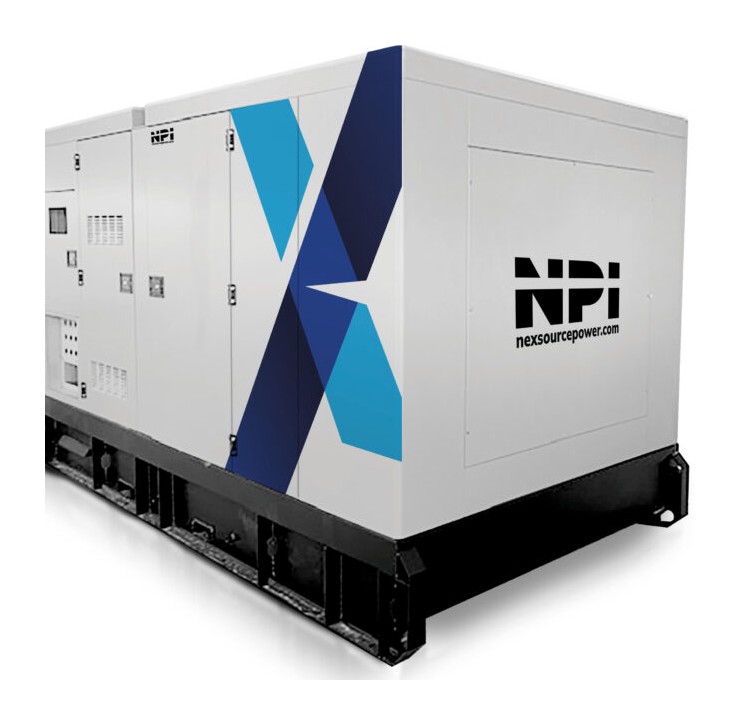

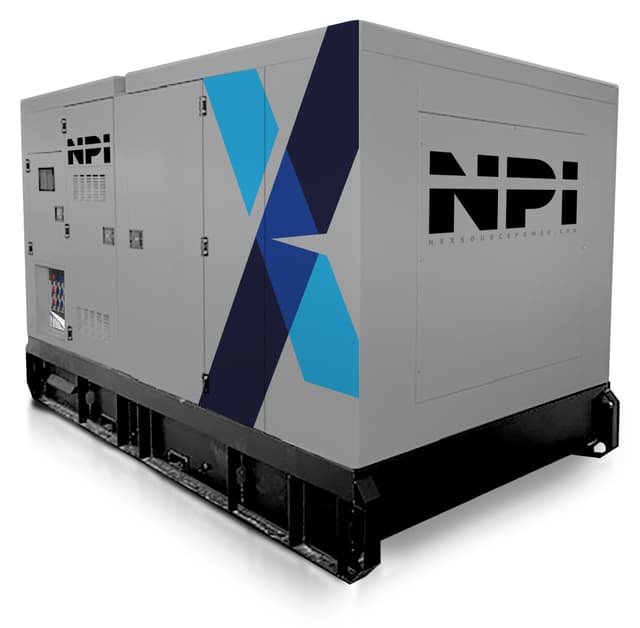

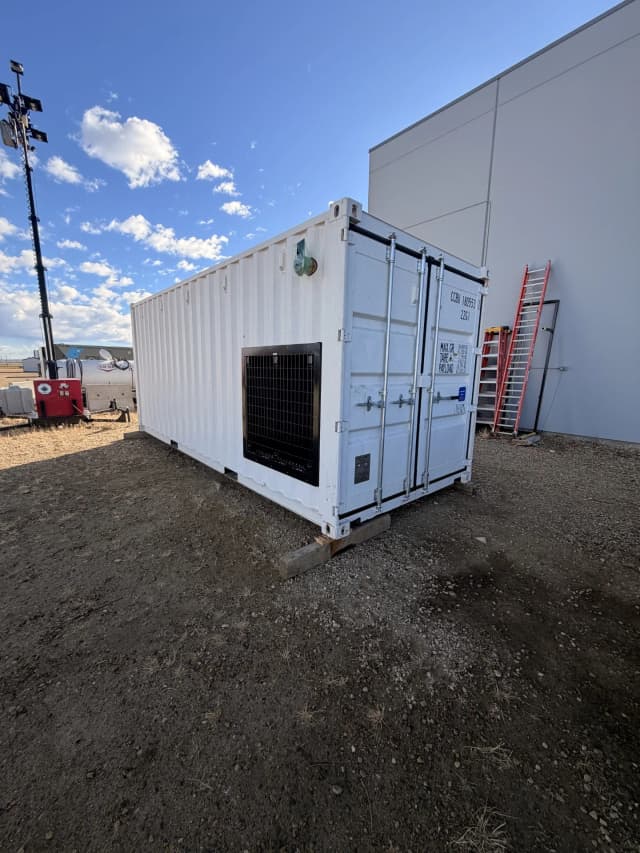


Shopping by fuel? Natural gas generators for sale and diesel generators for sale each go deeper on one. Buying on a budget? Used generators for sale groups the used and surplus sets. Renting instead? Commercial generator rentals covers the same buildings on a rental term.
The set has to match what the building runs at. Smaller commercial buildings are often 120/208 V; many larger ones in Canada are 347/600 V; some plants run 277/480 V. Each listing states its voltage — check it against the main breaker label before anything else.
Three-phase for anything with large motors. Size to the loads the set must actually carry when the utility is gone, plus the start of the biggest motor, rather than to the rating on the main breaker.
A building with a gas service may be able to run a natural gas set from it, if the meter and line can deliver the volume the engine burns at full load. Without gas, it is diesel or propane, and the tank becomes part of the purchase.
A pad outside, a roof or a room inside. Distance to doors, windows and the property line, exhaust direction, and how close the neighbours are all shape which enclosure works.

A mismatch can be bridged with a transformer, but it adds cost and floor space that a matching set doesn't need. Compare the two before you compare prices.
List what must run during an outage with its kW or amps, and mark the largest motor. That list sizes the set, and it is what your electrician will need for the transfer switch anyway.
For a natural gas set on an existing service, the gas utility confirms whether the meter and pressure can feed it. Ask before you buy, because a meter upgrade can take longer than delivery.
Once installed, put the set under load for long enough to watch it settle, not just start. NexSource rents load banks, so ask for one to be quoted alongside the set.
When the load is still growing or the budget sits in next year, a rent-to-own unit lets the business run on the set it would buy, with the rent counting toward the purchase if it decides to keep it.
There is no list price on the site. What a set is worth depends on more than its kW: its running hours or build, the enclosure, the control panel and any work done on it. Name a listing, or send the building's voltage and load list, and you get a written price for one specific unit.
If the property has a gas service that can supply the engine, natural gas avoids storing and topping up fuel and suits a set that has to be ready for years. Diesel or propane makes sense where there is no gas, or where the set must run independently of any utility. The listings include both fuels; the natural gas and diesel for-sale pages compare them in more depth.
It varies by unit. The NPI Series packages are built at the Red Deer shop. For the other sets, the listing states the condition where it is known; where it doesn't, ask, and have the answer written into the quote along with the hour-meter reading.
That decision belongs to the building's engineer and the authority having jurisdiction. In Canada, emergency power for life-safety systems is governed by CSA C282 through the building code, and the design comes first. Bring the engineer's requirements to the enquiry and the listings can be checked against them.
Connecting a generator to a building is permitted work: a licensed electrician for the transfer switch and wiring, and a licensed gas fitter if it runs on the building's gas. Tell us who will install it when you enquire, so the quote states clearly what is and isn't included.
Many sets listed for sale are also offered for rent; the For Rent badge on a listing shows which. A few, NPI Series packages among them, carry a Rent to Own badge, where rent paid goes toward buying the unit.
Send the service voltage, the load list, the fuel on the property and whether the set is for standby or prime. We will match it against what is listed and price a specific unit in writing, or tell you plainly if nothing on the list fits.